Wednesday, August 1, 2012

New Digs - Africa


Three years on a tiny Caribbean island left my girlfriend and I satisfied with our experiences there.  We were able to travel throughout the region, make some lifelong friends, have more than our fair share of adventure and catch some incredible fish.  One of the best things about it was having Mark and Adam down to take advantage of the salty opportunities.  All one needs to do is look back into the history of this blog before the autumn of 2009 to see how we've evolved and stepped up our game since.  However, as the world is huge and our island was small, it was time to move on.

When it's time to raise the stakes and search for new employment opportunities, one of the first things I consider is the fishing.  The caribbean was a no brainer.  This new place, while not offering the frequency of fishing that the ocean for a front yard did, it does offer extremely unique and high quality opportunities.

About a week ago, my girlfriend and I moved to Dar es Salaam, a city on the east coast of Tanzania, bordering the Indian Ocean.  It's at the same latitude as the Seychelles and only a short and cheap flight away from there (!!!!).  Giant Trevally are on the menu someday in the future, I swear it.

Tigerfish inhabit the inland rivers.  Unfortunately, those ecosystems also harbor quite a few animals that could kill or eat a person, which will put a damper on our DIY fishing.

The massive lakes of Tanganyika, Malawi and Victoria are home to a few hundred species of cichlids, more than a few of which are carnivorous.  Also, the infamous Nile Perch prowls those waters.

On top of all of that, Tanzania has cornered the market on safari.  With a higher percentage of land given over to reserves and parks than any other country, we won't lack for adventure.  Earlier today we returned from our first taste of the Africa savannah, a trip to Mikumi National Park.

There is something incredible about driving from your apartment for a few hours, not going through any fences or enclosures, and pulling up alongside elephants, giraffes, hippos, crocs and lions.  The new camera got a serious workout.


Africa's #1 killer.  We observed two hippos fighting for control of a small pool.  They ran through the pool while underwater, pushing a 2ft bow wave infront of their submerged bodies.  They're an incredibly impressive animal.


Nothing will sharpen your eyesight more than taking up birding.  It teaches you how to look.  I owe more than a few bonefish to this new hobby.
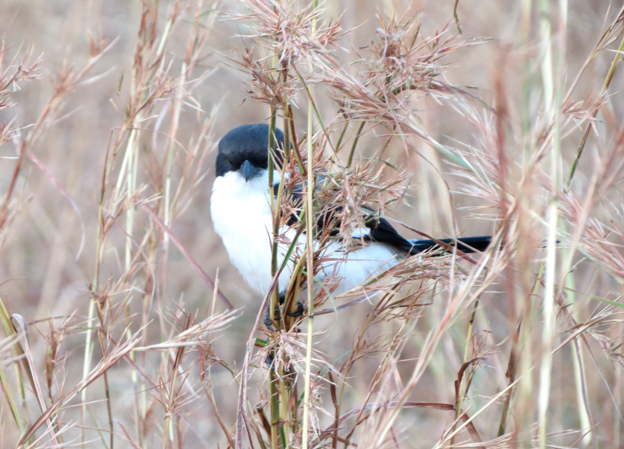
 Long-tailed Fiscal

 White-backed Vulture


Lilac-breasted Roller 


Little Bee-eater 


Just before sunset, three lioness were chased through tall grass by a vanguard of huge bull cape buffalo.  The lions were stalking the young, but the giant animals would have none of it.  We returned the next morning to the same spot and woke the three lions, one newly limping from the encounter with the angry herd from the night before.  This lion stared me down from 15ft away.


First rule of safari - Don't get out of your vehicle near the tall grass.  Lions are harder to see than bonefish in their respective environments.


 The first of many African sunsets.  

This River Is Wild is about to get a bit more Wild.  I'll be based here for at least the next two years while Mark holds it down along the Eastern US and Adam catches every carp swimming.

Monday, July 30, 2012

From Bad To Worse


If I had to be honest, my first night alone on the island was really creepy. Despite having camped here numerous times over the past three years, I was always with someone else. As I set up the hammock between the only trees on the island, I couldn't help but look over my shoulder at every noise coming from the bush. By the time everything was set up, I was inside the bug net rocking back in forth in the wind and on the verge of passing out from sheer exhaustion, despite my trepidations.


In the morning, I was granted about an hour of sunshine before things started to get worse. In that hour, I had several chances at fish, including a big one but I couldn't make it happen. The big one flat out refused my fly, I had a pair of bonefish rush my fly only to have another horse eye jack take it, and in the above picture you can see what happens if you accidentally overshoot a fish by a few feet.


Then, the rains came. Intermittent at first with several passing showers but the sun rarely made an appearance, which greatly reduces your chances of seeing a bonefish.


Soon, small storm systems started rolling through, bringing heavy rain that lasted anywhere from 10-30 minutes. I spent the time in the hot car, drinking warm water, and reading Game of Thrones. 


With things looking downright dreary, I made an executive decision to explore the north shore of the island. Here you have a very large barrier reef and a few shallow bays rather than immense flats. I rigged the spinning rod hoping to catch something.


The north shore is a maze of sandy roads, pot holes, and salt ponds. With no map, you have to rely on instinct. With no way of communicating with civilization, you run the risk of breaking down, getting stuck, or flat out getting lost (only for a short while). I found a familiar spot from previous excursions when I came upon a pile of bones. Last year, we found a skinned bull. This was all that remained. 


The roads lead right up to the shoreline where one can walk the deserted beaches. I caught a few small jacks and snappers on fly and surprisingly caught nothing on the spinning rod.


I re-found a few promising shallow bays ideally suited for fishing a low tide. I planned on coming back in the morning to look for some fish and hopefully a tailing permit. At this point, I needed to find a place to string up my hammock.


Near sun down, I found an abandoned beach bar that had a cabana on the beach. It had four concrete pillars holding up a thatched roof of palms. Between two pillars, I found my sleeping quarters. I had to park the car a few hundred yards down the beach and carry some gear to the cabana. I was hoping that the thatched roof would provide some shelter from the passing storms.


With the DSLR in the car (sorry), the best sunset of the entire trip unfolded on the horizon as I bombed casts out into the reef to no avail. The sun warped from hues of red and orange and then faded to pink and finally purple. I couldn't believe how purple it got.


With the sun setting before 8 o'clock, I crawled into my hammock and began reading via headlamp. Around 9:30, as I was attempting to fall asleep, the wind picked up considerably and the temperature dropped a few degrees. I peered out of the hammock and realized there were no longer any stars in the sky. Storm time.

The rain started slowly at first and I wasn't too worried about getting wet. The thatched roof of palms wasn't letting any water in. As the wind picked up it forced the rain to come down at an angle but I wrapped myself in a blanket and brought the other half of the hammock on top of me to create a cocoon. A half an hour later, the rain was only getting worse, but I was still dry.

As the rain continued to come down at a heavier rate, rain began to seep through the thatched roof and saturate the bug net, hammock, the towel, and eventually my clothes. I had to pack it in. What started as a dream sleeping destination quickly turned into the night from hell. My bags, sleeping quarters, clothes, and book two of Game of Thrones were soaked. In rain and flashes of lightning, I had to take everything down and hike back to the car. Wet and covered in sand, I had to navigate back through the maze of sandy roads and find my way back to the dock to recover.


The dock sticks out into the Caribbean Sea and contains really heavy wind. I set up the hammock to air dry and stayed there until everything was dry. In the meantime, I blew off some steam by jumping several tarpon and landing one. Around three in the morning, I made my way to the trees to set up for a few hours of sleep before awakening the following morning to wipe this day off the books.


Friday, July 27, 2012

A Bag of Bones and a Perfect Send Off


Arriving on day two were two of my brother's friends from the TTT fishing club. My brother and I had the task of getting them on their first bonefish on fly. When Matt left, they would be the ones to carry on the torch and take fly fishing trips here.


Matt and I awoke a little earlier than normal and he dropped me off on the beach, while he headed to pick up Matt and Brian at the ferry dock. Fifty yards down the beach, I had a pair of nice bonefish heading my direction. They cruised no more then ten feet off the beach in about ten inches of water looking for an easy meal. I provided it. However, they were accompanied by an unseen threat: the horse-eye jack. The small jack swooped in before both bones and nailed the fly. Rather then make a commotion, I let the jack realize his folly and spit out the fly. I made another short cast and had my bonefish screeching to the horizon as Matt and his friends pulled up for the land.


As we discussed strategy for the day, a large cow emerged onto the beach about to go for a morning dip and drink. The main problem being that it decided to walk down (in the water) the entire beach front. Nonetheless, we decided to walk the beach and came away with a few chances. Matt was able to hook up on a nice bonefish spotted from distance. However, the hookup came in close and all the excess line coiled in the water at his feet proved to be a costly mistake.


Later, we decided to walk a larger flat for a few hours. We broke into two sets of pairs figuring that if we kept our footprint lower and doubled our eyes, we would improve our chances. The only problem was, the bonefish never showed up. Between the four of us, we saw one fish.

However, I did have another opportunity at a permit. Located roughly in the same location, the same time of day, and on a similar tide, I figured it was the same fish from the day before. This time, he was tailing and I saw him from a distance. I also decided that I was going to change and put on a crab imitation rather than stick with a bonefish fly. As soon as I finished my knot and clipped the excess, heavy cloud cover rolled in and I couldn't see the permit. Finally, he tailed again revealing his location and I made the cast. He didn't see it. I made another, landing the fly on a dinner plate in front of his head, just like they tell you to do. He spooked, giving painful meaning to the phrase, "hook em or spook em".

With the lack of fish and intermittent cloud cover, we decided to walk a sandy flat in the vicinity and came away with several shots at fish. One particular fish will probably hunt Brian's dreams until he catches a bonefish to wipe his memory clean.


With the five o'clock ferry on the way, we decided to walk one last beach. Matt, Brian, and I made our way east and into the wind. I spotted a very large bonefish making his way off the beach (a tough shot) and Brian decided to give Matt his last chance at a bonefish before the big move.

Matt fumbled, stumbled, and seemed about to pack it in, when an unseen fish came out of nowhere. It miraculously did not spook as his fly line landed across its back. Picking up the line, Matt made a fresh cast, stripped once, and tied into the fish. Letting the moment soak in, he landed and released his last bonefish for quite some time. It was made possible because Brian (still seeking his first bone) relinquished the opportunity giving him a perfect send off.

We drove to the ferry dock and I dropped off my brother, Matt, and Brian. It was then that I realized I had the place to myself for five more days. Alone.


Wednesday, July 25, 2012

Tricos


In the heat of summer, the best trout fishing in the Lehigh Valley area is relegated to tailwaters and limestone streams. Outside of terrestrials and midges, the only major hatch occurs from the tiny trico mayfly and it runs from July all the way until the first cold snap in October. The earlier you hit this hatch the easier it will be to fool the trout since they become more educated to flies as the hatch progresses. The Little Lehigh is often a sure bet to fish the trico hatch, but tricos can be found on a lot of waterways, including freestone streams.

I had my good friend Patrick out on the Little Lehigh to fish for a few hours in the morning and we found ourselves locked in battle with pods of small rainbows and browns eating tricos. Pat is new to the sport and absolutely loves the challenge of fishing for trout with dry flies. I found a few Al's Tricos and Griffith's Gnats in my fly box, tapered an already long leader down to 6x, and tried to get him on a trout. After two hours, he missed dozens of fish, every way imaginable. Fishing tricos requires a very accurate cast to a feeding fish's lane and with all the naturals, it requires a perfect dead drift. Those are two areas in which beginning fly fishermen struggle most. Frustrated, he routinely handed me the fly rod to show him the tiny flaws in his game and I obliged by catching many of the fish he was working for the two hours. Frustrating as it was, it was a good lesson to learn the subtle nuances with fishing tiny flies to educated trout.